WWE Mayhem
- 4.3
- Rating
- 10.00M
- Installs
- Free
- Price

 Analysis by App-foxy
I went into WWE Mayhem expecting a quick wrestling game built around recognizable WWE-style action, and that is exactly where it works best. It is a free action game from Reliance Games that turns matches into short bursts of tapping, timing, movement, and dramatic reversals. The appeal is not a deep simulation of every wrestling rule. Instead, it tries to make each exchange feel immediate: I attack, the opponent answers, I look for an opening, and one successful sequence can change the whole match.
That design makes it easy to understand within a few minutes, but it also creates a clear trade-off. Players who want fast arcade entertainment will probably enjoy the direct controls and energetic presentation. Players looking for a detailed wrestling simulator, long technical matches, or complete control over every move may find the experience simplified. After spending time with it, I see it as a pick-up-and-play game first and a serious wrestling simulation second.
How the first action pulls you into a match
The first thing I noticed is how quickly the game gets to the action. There is little need to study complicated menus before trying a match. The controls are designed around readable combat decisions, so I can concentrate on what the opponent is doing rather than memorizing a large command list. That accessibility is important on a phone, where a complicated control scheme can make a match feel awkward before it becomes fun.
You May Also Like

 Blood Strike: 2.5 Anniversary
Blood Strike’s Loadouts Turn Every Drop Into a Tactical Gamble
A close look at Blood Strike’s custom loadouts: how fast access to signature weapons reshapes its battle royale rhythm, rewards preparation, and narrows the gap between fights.

 Pandora - Music & Podcasts
Pandora’s Music Is Easy to Start, but Harder to Recover
Pandora’s strength is its low-effort path from a seed to a station. Its weak spot is how much confidence it asks you to place in connection, setup, and quiet recovery.

 8 Ball Pool
 Is Built on Rivalries, Rematches, and Routine
A close look at the rivalries, rematches, shared routines, and unanswered safety questions that turn a quick pool match into a persistent mobile community.

 Samsung Music
’s Quiet Strength Is Playing What You Already Own
Its reach comes less from spectacle than from dependable access to a personal library. That simplicity is both the app’s strongest retention engine and its ceiling.

 AccuWeather: Weather Radar
AccuWeather Review: A Quick, Clear Forecast for Everyday Decisions
For everyday plans, the best forecast is the one you can understand quickly. AccuWeather makes rain timing, radar, and local conditions easy to act on, with a few trade-offs.

 Hill Climb Racing
Why Hill Climb Racing Still Turns Crashes Into One More Run
A tiny car, a bumpy hill and one more upgrade: Hill Climb Racing keeps resurfacing because its simple chaos makes every near-miss feel personal.
More From Our News Desk



Attacks have a satisfying sense of impact, especially when a hit connects at the right moment. The exaggerated presentation suits the arcade approach, and the visual feedback helps me understand whether I am applying pressure or losing control. I do not need to inspect a detailed combat log to know that a move worked. The animation, sound, and change in momentum communicate it quickly.
The best way to approach the opening matches is to resist the urge to tap constantly. Fast input can create the impression that aggression is always the answer, but the game becomes more interesting when I watch for the opponent’s response. A short pause before committing to an attack often gives me a better chance to react. That small habit turns the opening action from random button pressing into a simple rhythm of pressure and defense.
This is also where the game separates itself from many wrestling-themed alternatives. A console-style wrestling game usually gives the player a broader move set and more elaborate match management. WWE Mayhem keeps the focus narrower, which makes it more comfortable during a short phone session. I can begin a match without needing the same level of preparation, although I give up some of the freedom and realism that a full simulation would provide.
For a new player, I recommend treating the first few matches as practice in reading animations rather than as tests of speed. Notice how the opponent telegraphs an attack, learn when a defensive response is safer than another strike, and avoid spending every available option immediately. The game becomes less frustrating once I stop trying to win every exchange and start choosing when an exchange is worth taking.
The feedback rhythm is the real hook
The core loop depends on feedback arriving quickly. I perform an action, see whether it connects, respond to the opponent, and then receive another opportunity. That sequence gives the matches their arcade character. Even when a bout does not go my way, I usually understand why the momentum shifted: I attacked at the wrong time, failed to defend, or allowed the opponent to recover.
That clarity is one of the game’s strongest qualities. A mobile action game can feel unfair when the screen becomes too busy or when a loss seems unrelated to the player’s choices. Here, the basic exchanges are easier to read. The clean cause-and-effect relationship encourages another attempt because I can identify something specific to improve instead of simply blaming luck.
There is a useful distinction between playing aggressively and playing carelessly. Aggression can create satisfying momentum, but repeated attacks without attention to the opponent’s timing leave me exposed. I found better results by alternating between short offensive bursts and deliberate defensive moments. This approach may sound obvious, yet it is one of the more important practical lessons because the game rewards awareness more than frantic tapping.
The feedback rhythm also makes the title suitable for different kinds of players. Someone familiar with wrestling games can quickly recognize the idea of controlling momentum, while a casual player can enjoy the immediate spectacle without understanding every wrestling convention. The game does not demand that I know the details of professional wrestling to appreciate a successful reversal or a well-timed attack.
Still, the simplified structure has limits. If I want every match to develop like a long tactical contest, the repeated action pattern can begin to feel familiar. The excitement comes from improving timing and chasing the next successful sequence, not from discovering a completely different style of play in every fight. That distinction matters when deciding whether this is the right game for extended daily sessions.
One practical tip is to use the early portion of a match to observe rather than immediately chase a finish. I pay attention to how quickly the opponent recovers and which responses leave me vulnerable. This makes later exchanges more deliberate and reduces the feeling that a match was decided by a single confusing moment. It also gives the reward at the end more meaning because the victory feels connected to a decision I made.
Why the reward makes another attempt tempting
Winning is not only about watching the opponent go down. The game builds its motivation around the sense that each successful match contributes to continued progress. That reward structure gives ordinary encounters a purpose beyond the action itself. I finish a bout, consider what I handled well, and then have a reason to return for another match rather than closing the game immediately.
The free-to-play format is important here. WWE Mayhem costs nothing to start, but in-app purchases range from $0.49 to $399.99 per item. That wide range means I would approach the progression carefully and avoid treating every available purchase as necessary. The most comfortable way to play is to decide early whether I am enjoying the combat on its own, rather than allowing the reward layer to dictate every choice.
I prefer using rewards as a reason to improve my play instead of as a shortcut around it. When I win because I managed the action better, the progression feels earned. When I become focused only on collecting the next upgrade or opening the next opportunity, the matches can start to feel like tasks. The game is more enjoyable when the action remains the main event and the reward supports it.
That is also why I would not recommend spending immediately after installing. New players should first learn whether the basic match rhythm suits them. A purchase cannot solve a mismatch between the player and the combat style. If someone dislikes short arcade exchanges, more content or stronger options will not transform the game into a detailed wrestling simulator.
The reward loop is particularly effective for short everyday sessions. Imagine having a few minutes before leaving home or while waiting for an appointment. I can play a match, complete a small piece of progress, and stop without needing to reserve an entire evening. The game gives that brief session a beginning and an end, which is more convenient than a title that only feels satisfying after a long uninterrupted play period.
On the other hand, players who dislike free-to-play pressure should pay attention to their own habits. The presence of optional purchases can make progression feel less relaxed, especially for someone who tends to spend whenever a game presents a new advantage. I would set a personal limit before playing and treat purchases as optional entertainment rather than part of the basic entry requirement.
The reset after a loss keeps the loop alive
Every match eventually resets the situation. I either win and move forward or lose and return to the point where I need to try again. That reset is not merely a failure screen; it is what gives the next session its shape. A loss leaves me with a question: should I attack less often, defend earlier, or change how I handle the opponent’s pressure?
This is where the game’s arcade identity becomes most visible. It does not ask me to invest in a single match as if it were a long simulation. Instead, each attempt is a compact experiment. I test a different approach, receive immediate feedback, and decide whether the next attempt deserves another few minutes. That structure works well on a phone because restarting does not feel like abandoning a huge amount of time.
However, the reset can also expose repetition. If I play for too long without changing my approach, the loop of action, result, and retry may lose its freshness. I have found that taking a break after a frustrating loss is better than forcing another attempt immediately. Returning later makes the feedback easier to read, while repeated impatient retries usually lead to the same mistakes.
A useful personal rule is to identify one adjustment before restarting. I might decide to wait longer before attacking, concentrate on defense, or stop chasing momentum after a successful hit. This gives the next match a clear purpose. Without that small reset routine, it is easy to replay mechanically and assume the game is the problem when my approach has not changed.
The reset also answers a practical question many new players have: is the game easy to pick up again after time away? In my experience, yes, because the central actions are straightforward and the match rhythm returns quickly. I do not need to relearn a large control system every time I open it. That makes it more forgiving than games whose enjoyment depends on remembering a complicated chain of commands.
It is less suitable for players who want a persistent, story-heavy experience in which every decision permanently changes the world. The match reset is designed to encourage repetition and refinement, not to create a long narrative consequence for every result. I would choose a different type of game if my priority were character-driven storytelling or a highly detailed career simulation.
What the audience size tells me, and what it does not
The game has reached more than 10 million installs, with an average rating of 4.3 from roughly 796,000 ratings and about 23,000 written reviews. Those figures suggest that the approachable wrestling-action formula has found a substantial audience. They also make it easier for a new player to see that the game is not an obscure experiment with no established player interest.
Popularity alone is not a guarantee that I will enjoy it, though. A large audience can include people attracted by the WWE theme, players who only want occasional arcade matches, and fans hoping for a deeper wrestling experience. The rating gives useful context, but my decision would still depend on whether I enjoy timing-based mobile action and a repeatable match loop.
The Teen content rating is another practical consideration for families. I would check the device’s purchase settings before handing the game to a younger player, particularly because the title includes in-app purchases. The rating and the purchase range make it sensible to establish boundaries in advance rather than relying on a child to understand every transaction prompt.
Device compatibility is relatively broad for modern phones because the minimum operating system is Android 9. The current version is 1.105.115, so I would keep the app updated when possible to use the version intended for current play. I would also leave some storage and battery headroom for any action game session, especially if I plan to play for a longer period, although my main concern here remains the combat loop rather than technical extras.
Reliance Games is the developer behind the title, and the game’s presentation reflects a deliberate effort to make wrestling action approachable on a touchscreen. I do not need to approach it like a console replacement. Its strongest use case is a phone-friendly version of arcade wrestling that can be started quickly and repeated whenever I want a short burst of action.
Who should play it and who should skip it
I would recommend WWE Mayhem to someone who wants recognizable wrestling energy in a compact mobile format. It suits players who enjoy quick matches, visible impact, and a progression loop that gives them a reason to return. It is also a good fit for people who prefer learning through repeated attempts rather than reading long tutorials before they can have fun.
It works especially well for casual sessions. I can play while taking a short break, stop after a match, and return later without feeling that I have interrupted a complex campaign. The action is immediate enough for a newcomer, while the timing and momentum give experienced players something to refine beyond simply tapping the attack option.
I would skip it if my main goal is a wrestling sandbox with extensive customization, highly technical grappling, or the kind of detailed match control associated with larger platforms. I would also be cautious if I dislike free-to-play progression or feel uncomfortable around optional purchases. The game’s free starting point is helpful, but the broader purchase range means disciplined spending matters.
Compared with a traditional fighting game, this title leans more heavily into wrestling presentation and momentum. Compared with a full wrestling simulator, it is faster to learn and easier to play in short bursts, but less ambitious in its handling of match detail. Compared with a simple endless action game, it offers a stronger sense of contest because the opponent’s responses and the reset after defeat give each attempt a clear outcome.
My most useful advice is to judge it after several matches rather than after the opening minute. The first action is immediately accessible, but the real question is whether the feedback rhythm makes you want to improve. If you enjoy noticing small timing mistakes and trying again with a better plan, the reward and reset loop can carry the experience. If you need constant novelty or deep simulation, the same loop may feel narrow.
My verdict on the complete action loop
WWE Mayhem succeeds because its cycle is easy to understand: start a match, make an attack, read the response, earn the result, and decide whether to reset for another attempt. The action gives instant feedback, the reward supplies a reason to continue, and the reset turns a loss into a manageable challenge rather than a major setback.
I like that the game respects short mobile sessions without removing the satisfaction of improvement. My enjoyment comes less from treating it as a complete wrestling career and more from chasing a cleaner match than the last one. When I play with patience, the controls feel more meaningful; when I rush, the limitations of the arcade design become obvious.
The free price makes it easy to test, while the Teen rating, Android 9 requirement, and available in-app purchases are worth considering before installing it for a younger player or on an older device. Its large install base and 4.3 average show broad appeal, but the best match is with players who specifically want fast WWE-themed action rather than a full simulation.
My final recommendation is positive with a clear condition: try it if you want a compact action game that makes each rematch feel like an opportunity to correct one mistake. I would not choose it as my main wrestling game if I wanted deep management or highly technical control. As a repeatable phone experience, though, its loop is effective. One successful exchange leads to a reward, the next loss invites a reset, and that small promise of doing better is usually enough to make me start one more match.
FAQs for WWE Mayhem
01What is WWE Mayhem?
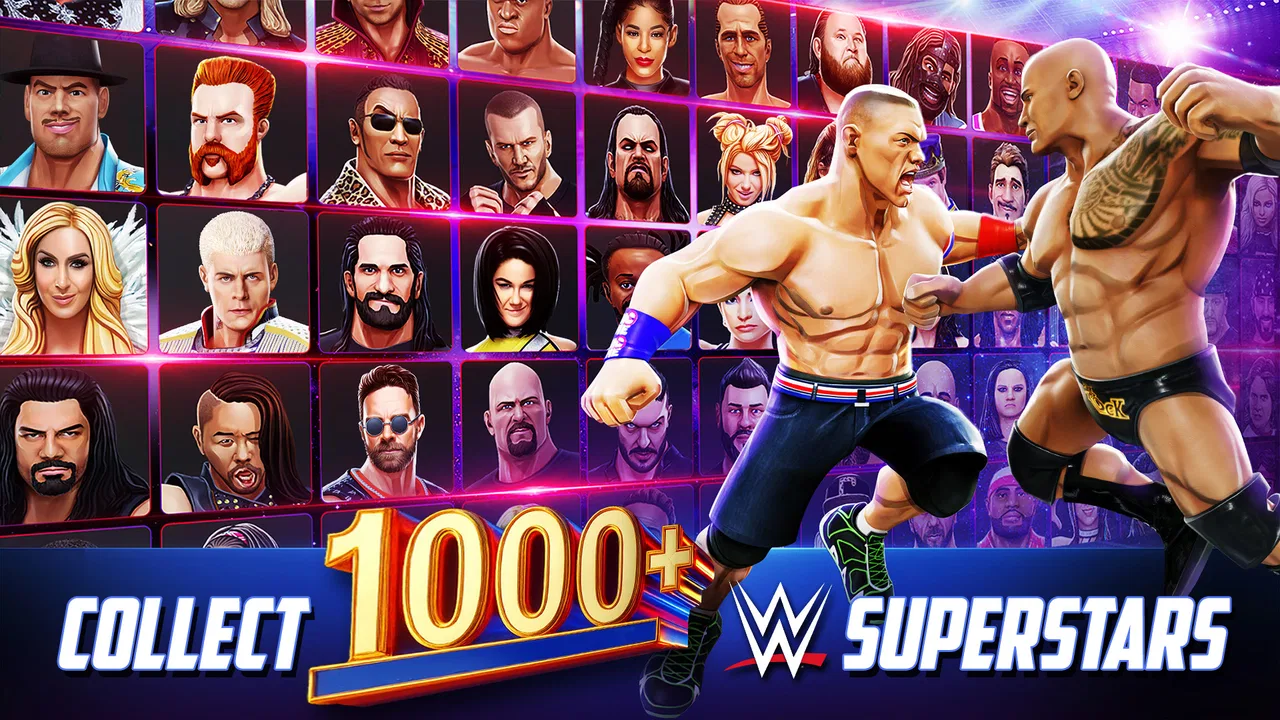
WWE Mayhem is an arcade-style wrestling game for Android and iOS featuring WWE Superstars, Legends, and Hall of Famers. Matches are designed around quick taps, swipes, and special attacks rather than complex simulation controls. You can build a roster, upgrade wrestlers, complete story content, and compete in different match types inspired by WWE action.
02Is WWE Mayhem free to download and play?
Yes, WWE Mayhem is free to download, but it includes optional in-app purchases. You can make progress without paying, although purchases may provide additional resources, character upgrades, or faster progression. The game also uses energy and other limited resources, so players who prefer uninterrupted sessions may encounter waiting periods or purchase prompts.
03Can I play WWE Mayhem offline?
WWE Mayhem generally requires an internet connection for most of its features. An online connection is used to load game data, synchronize progress, access events, and participate in competitive or multiplayer modes. Because of this, it is not the best choice for completely offline gaming, and availability of certain content may depend on the game servers.
04Which WWE wrestlers are available in WWE Mayhem?
The roster includes a selection of current WWE Superstars, popular Legends, and other recognizable wrestling personalities. The exact lineup can change through updates, limited-time events, and new releases. Wrestlers usually have different classes, strengths, abilities, and signature moves, so collecting several types of characters is useful for handling different opponents and match requirements.
05Is WWE Mayhem suitable for children and new players?
WWE Mayhem is relatively easy for beginners because its controls focus on simple taps, swipes, blocking, dodging, and timed attacks. However, it contains cartoon-style fighting, competitive mechanics, advertisements, and optional purchases. Parents should review the device’s purchase and privacy settings before allowing children to play, especially if the device is linked to a payment method.
Pros
- Fast
- accessible wrestling matches designed for mobile play.
- Large roster featuring WWE Superstars and Legends.
- Simple controls make it easy for new players to start.
- Frequent events provide additional goals and rewards.
- Team battles add variety beyond standard one-on-one matches.
Cons
- Energy limits can interrupt longer play sessions.
- Upgrade materials may take considerable time to collect.
- Some content and wrestlers require significant grinding.
- Online features depend heavily on a stable connection.
- Matchmaking and difficulty can feel uneven at times.

WWE Mayhem
Gallery